


Before I get started on today’s post, here are all of my previous Monster Hunter tip posts in one place:
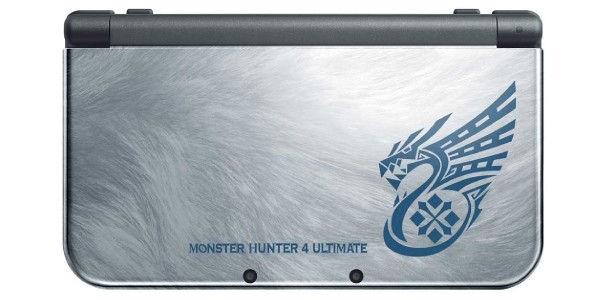
Monster Hunter 4 Ultimate has finally arrived here in the West! Not only am I excited to play the game (and I’ll be playing it a lot), but I’m hopeful this is the Monster Hunter game that will finally popularize the series significantly here in our part of the world. It’ll be hard to top Japan, though: the first version of the game, Monster Hunter 4, which was released only in Japan on September 14, 2013, sold over 1.8 million copies in its first two days alone. By the end of 2013, it had sold around 3.3 million copies. On the Japanese best-seller list, it was second only to Pokemon X and Y.
That’s huge.
I don’t know if the difficulty of the series relates to its lack of such resounding success in the West, but as the hunting community here grows, so does the ease of getting into the addicting gameplay! Monster Hunter 4 Ultimate itself will have more tutorials and options that cater to newcomers than previous games in the series, but here are some common concerns that may baffle you, followed by the best hints and explanations I can offer:
What is Monster Hunter?
In the world of Monster Hunter, beasts of all sizes roam the wilds. The people in this world depend on the hunting of these monsters for their survival. Large, ferocious monsters may threaten lives or livelihoods, but even hunting herbivorous monsters like Aptonoth has its uses, providing helpful materials like monster bones and meat.
So it’s no wonder the services of a capable monster hunter are in such high demand in this world! That’s where you come in. The gameplay is based around quests. Each quest is a favor you’re doing for one or more people. At first, they’ll be easy requests: gather 10 blue mushrooms or kill 5 Jaggi (small, carnivorous monsters). These simple quests prepare you for the main event (or events): hunting large monsters. Large monsters can be HUGE, let me tell you. They’re also very sturdy, so taking them down requires time and the right equipment.
Materials you gather from the field and carve from monsters are used to increase the power of your weapons and armor. Your character doesn’t necessarily level up or gain in stats, so your power is in your equipment. Armor and weapons are usually based on certain large monsters in look and function. To get all the required materials to complete a certain armor set may take multiple hunts against the same monster. Fortunately, most quests are open to complete as many times as you want.
Completing armor sets and upgrading weapons are addicting in nature, but the actual fighting in Monster Hunter is also fun and rewarding. There are 14 weapon types in Monster Hunter 4 Ultimate and dozens of specific upgrades within those. Since each type feels different than the others, you can change up the feel of the combat as often as you want. Mastering each weapon type alone could potentially take several hundred hours of gameplay. After 200+ hours of play, I only became proficient at just 2 weapon types (both blademaster): the long sword and switch axe.
Playing online or locally with friends adds even more to the appeal of Monster Hunter, and 4U happens to be the first handheld game in the series that can connect to the internet on its own. You can team up with up to 3 other players to take on monsters together–this cooperative gameplay can be incredibly addicting and satisfying.
Single-player vs. Multiplayer
You should spend your time in single-player mode to begin with, just to learn the ropes a bit before you potentially embarrass yourself online. However, the core hunting experience doesn’t differ much between the two, so feel free to jump into multiplayer at any time if you have a patient, experienced friend to talk you through the intricacies of hunting.
The one big difference between single-player and multiplayer is hunting rank. Your hunting rank only applies to multiplayer quests, though you can actually tackle these by yourself: the monsters here are more difficult to best than in the single-player mode, so bear that in mind. Back to hunting ranks, though: the first set of multiplayer quests you’ll have available are rank 1 quests. Some of these are what are know as “key quests.” The game doesn’t indicate which are which: that’s where the internet may come in handy! You can complete quests and get your all-important stamp of approval (a check-mark) whether they’re posted by you or a teammate. Once you’ve completed all of the key quests in a particular rank, you’ll see an “urgent quest” appear. In this case, you have to post it to get your check-mark, and once you’ve beaten it, your rank will increase.
A higher rank doesn’t make your hunter stronger; it just allows you to take on higher ranked quests, which means more powerful monsters that provide items needed for stronger equipment.
Weapons, armor, and items carry over between the single- and multiplayer modes, so you can help yourself out in your single-player adventure by working together with other hunters in the multiplayer mode or vice versa (though there’s only so much progress you can make by completing single-player quests).
Capturing Monsters
If you’re brand-new to Monster Hunter, one thing you’re sure to learn at a fairly early stage is how to capture large monsters. On paper, the process is simple: weaken the monster significantly (you can tell the time is right when a monster escapes to a different area with an obvious limp), lure it into a trap, and throw 2 tranq bombs at it (or shoot 2 tranq shots if you’re wielding a gunner weapon). There are two types of traps, shock and pitfall, and you can carry one of each on a quest, so bring traps and tranqs with you if you intend to capture a monster!
The method I just described is normally fail-safe. I struggled with capturing at first, even though I’m pretty sure I did everything right, but I went on to successfully employ this method dozens of times. Hopefully you won’t have the same problems I did, but if you do, here are the steps again:
- Step One: Weaken the monster significantly. Again, you can tell the time is right when the monster tries to limp away. I mean, really limp. It takes a while to whittle down a monster’s HP enough for this; it’s close to death at this point.
- Step Two: Set up a trap and lure the monster in. Once a limping monster escapes to the next area over, it might not be limping anymore, but rest assured it’s still ready to be captured. If you find it asleep in the next area over, set a trap up right next to it and then strike it with your weapon to wake it up; it’ll fall right in.
- Step Three: Throw 2 tranq bombs or shoot 2 tranq shots at the trapped monster. 2 really is the magic number when it comes to capturing a monster. If 2 tranqs don’t get the job done, then 3 or 4 or even 8 won’t work, trust me.
If those steps don’t work at first, hit the monster a few more times with your weapon and try again. Just remember that a limping monster doesn’t have much fight left in it, and you can’t capture a dead monster!
Quests that require you to capture a monster are not at all common. However, in a hunting-type quest, you can either kill or capture the target to win. Capturing a monster may yield different or better materials than what you get from carving a dead monster.
Gems and Skills
This section covers a fairly advanced topic, gems and skills. If your hunter has a full armor set equipped, you can go to his/her status screen, where you may find that some skills have been activated. Every piece of your armor will have around 3 skills attached to it, with point values attached to those. Activating a skill takes 10 points, and usually a matching set of armor will give you just enough points for that. But some skills can be increased to 15 points, becoming more powerful. This is where gems come in; you can ask the blacksmith to create gems for any skill, provided you have the right materials. These gems add points to your skills; the caveat is that you can’t equip gems to just any piece of armor. The description of your armor will include info on whether it has gem slots and how many it has.
Sometimes you’ll get talismans from hunting. These can be equipped to your hunter without altering appearance. Talismans can give you extra skills and they sometimes have extra gem slots too, so don’t forget to use them!
That’s all for today! Did you learn anything? I’m off to play Monster Hunter 4 Ultimate; maybe I’ll see you out in the field!


